Check Your Head: Possession
(Check Your Head is a new feature in which I write about movies that address mental illness to extremely varying degrees of success. Full disclosure: this is also preliminary promotion for the book I've been working on for the past two years)
Even if you're not into horror, you're likely aware of 1981's Possession. If classics like Psycho and Halloween are Horror 101, then Possession is advanced studies. A harrowing combination of cosmic, body, and psychological horror, its influences can be seen as recently as 2024's criminally underrated The First Omen. Watch it once and you'll never forget it, which is good because you will never want to watch it again.
Isabelle Adjani dominates the film as Anna, a woman driven to insanity by...well, it's not entirely clear, other than some sort of otherworldly being that she both fears and is drawn to. It revels in tormenting her, building up to what is arguably the most memorable, nightmarish scene in the movie, when Anna, trapped in a subway station, is fully claimed by this hostile force. Adjani gives a one-woman masterclass in going through it, shrieking, howling, moaning and cackling with maniacal glee, while moving her body like it’s being thrown around by invisible hands. It’s all the more astonishing when you learn that just two takes were needed to nail the scene, after which I can only assume she spent a week in bed.
While Adjani rightfully earned her accolades, her co-star Sam Neill in some ways has the more challenging role. As Mark, Anna's extremely estranged husband, his mental breakdown is more rooted in bleak reality, particularly in the first half of Possession, which is a take on Kramer vs. Kramer if everyone had died and gone to Hell.
The film opens as Mark, a spy on a mysterious mission, returns home to Berlin, where Anna's been left on her own to take care of Bob, their young son, in a grim dormitory of an apartment building. Anna has long decided that their marriage is over, and doesn’t even give Mark a polite “how do you do” upon his return before telling him there’s no chance of reconciliation.
Adding insult to injury, Mark discovers that Anna has a lover, Heinrich (Heinz Bennent), who, other than the fact that he lives with his doting mother, is superior to Mark in every way. So much so that, during one of many violent arguments, Anna tells Mark that she wishes she’d had a child with Heinrich instead of him. Mark doesn’t handle things any better, so consumed with anger and jealousy that he initially refuses to see Bob, preferring to marinate himself in a repugnant brew of alcohol and self-pity. They’re like two wounded animals, biting and slashing each other (or themselves, sometimes literally) the only way they can express their pain.
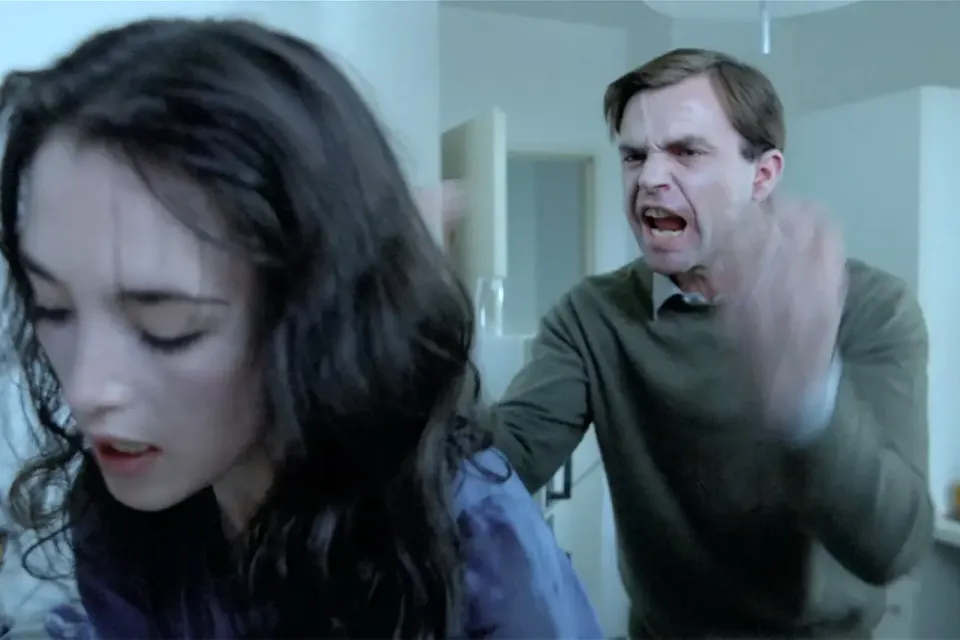
Even before that iconic subway station scene, Possession was a difficult watch for me. The rare times when Mark and Anna attempt to be civil to each other, they're like two aliens forced to live in a pod together, as the air is slowly being sucked out of it. During their increasingly physical fights, you wish that director Andrzej Zulawski would turn the camera away, if not end the scene entirely. But it keeps going, and Mark and Anna keep screaming at each other, and that raw rage feels intimate and forbidden. Like The Brood, also inspired by a marriage ending badly, it feels like something you're not supposed to see.
It reminded me too much of the end of my parents' marriage, an event that left a smoking crater where my young life had been, and the tumultuous years that followed. My father, like Mark, was so consumed with rage over my mother leaving him that I was left to mostly look after myself. He became someone I didn't recognize, alternating between crying jags and profane rants in which he threatened violence against my mother and whatever man she happened to be dating at the time. I was terrified that he would follow through on those threats, and what might happen to me if he did. Once the funniest person I knew, who entertained me with silly voices and bad puns, even years later his sense of humor was tinged with bitterness and cynicism. In many ways, he never really recovered, not even at the end of his life.
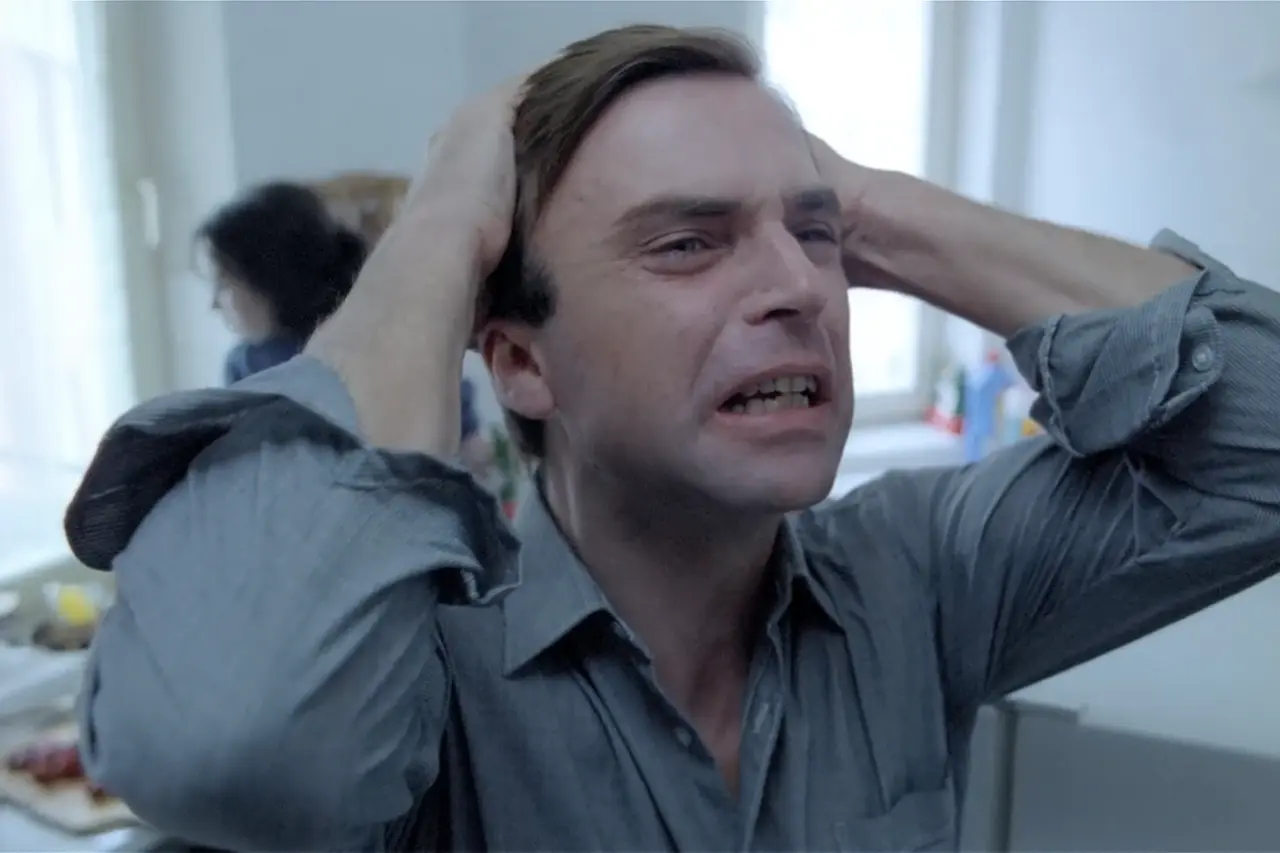
If your knowledge of Sam Neill is limited to Jurassic Park and his charming social media presence, you may not be ready for him in Possession. Sometimes shaking and sweating like he’s going through opioid withdrawal, he’s the film’s protagonist and antagonist, bully and victim, puppet and puppetmaster simultaneously. Anna is so cold and cruel to him when he arrives home that the audience is initially on his side. That is, until it’s clear that his desire to save his marriage isn’t out of any sense of love, but propriety (the film’s title has multiple meanings, you’ll soon discover). He’s not sad that Anna wants to leave him. He’s insulted, and that blow to his ego metastasizes into something grotesque and almost inhuman. I’d love to have been a fly on the wall when Zulawski directed Neill, presumably telling him, “You’ve just had all your skin peeled off, and someone keeps rubbing salt on you” before every scene.
Mark is an extreme example, but there is a considerably large kernel of truth in how he reacts to his impending divorce. Though divorce is often a net benefit for many people, it can also negatively impact mental health. According to a 2020 study out of Denmark, many recently divorced individuals reported higher rates of depression, anxiety, and even PTSD than their married and/or single counterparts. Those issues often impact their children as well, who may be treated as bargaining chips, caught in an emotional tug-of-war, or just ignored entirely.
That kind of trauma can have long-lasting effects: ask me how I know! Already anxious and shy even before my parents' divorce, I only became more withdrawn, spending much of my time alone, and often feeling like the only adult in the situation (I had just turned 13). My mother became too preoccupied with enjoying the single life to be concerned with how I was doing, while my father was too preoccupied with his own hurt and anger. In the end, my relationship with both of them became strained, at best. By the time my father passed away in 2009, I hadn't seen him in over five years and spoke to him perhaps once a month or so. I haven't seen or spoken to my mother in nearly a decade.
Though, again, Possession is an extreme example (and divorce is far from Mark and Anna's only problem), divorce can cause a sort of temporary insanity. It makes sense: divorce, for many people, can mean a loss of identity, a drastic change in income and living circumstances, loneliness, isolation, and estrangement from one's children. Just one of those can cause someone to spiral into depression, anxiety, and even rage.
Bafflingly, it's often played for laughs, most famously in 1989's The War of the Roses, in which Kathleen Turner and Michael Douglas play a couple whose divorce becomes so outrageously acrimonious that they both end up dead by the end. Though the film was a box office success and critically acclaimed, having lived through that situation to a lesser extent, with a father who regularly threatened violence, I didn't find much funny about it at the time. Watching it again as an adult years later, and recovered enough from my parents' bullshit to be able to maintain (mostly) normal romantic relationships, it still wasn't very funny.
At least in Possession, Mark gets no pleasure out of tormenting Anna. In The War of the Roses, the characters take a sadistic glee in the pain they cause each other. The humor is in how much they loathe each other. One review described it as a satire of the concept of a "civilized divorce," as if such a thing wasn't possible. That seems to suggest that a divorce is supposed to be bitter and ugly, and that temporary insanity is justified, as is the desire to hurt (if not destroy) our estranged spouse. It's almost a socially acceptable form of insanity, regardless of who it impacts.
Despite the bizarre, nightmarish places Possession goes, its most haunting moments are between Mark and Anna, the coiled to strike postures, their little son ignored in favor of cultivating their pain and hatred for each other, like so many children of divorce are (ask me how I know!). It's brutal and unsparing in its depiction of that temporary insanity, because of the unsparing brutality it inflicts. Perhaps what needs to be satirized about it is our pervasive belief that it's how it's supposed to be.

Comments ()