It is 2026, and we still don't know how to talk about mental illness
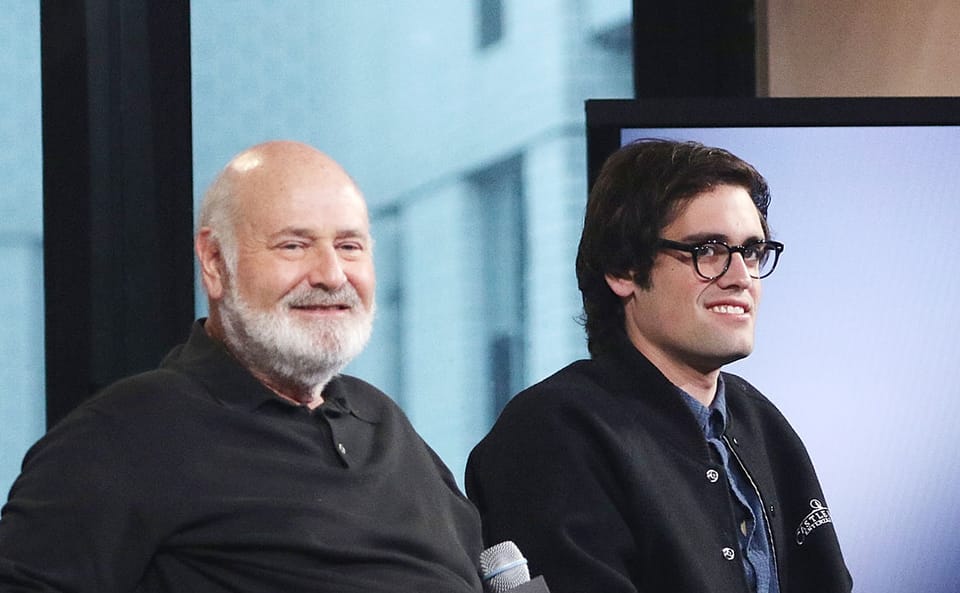
I wanted to wait a little while to write about what happened to Rob and Michelle Reiner, not just because I was on a self-imposed hiatus from writing in December, but I didn't want to make it seem like I was trying to capitalize on a tragedy for my own benefit.
But even waiting till now, I still am, at least indirectly. The way social media addressed the brutal deaths of the Reiners at the hands of their younger son reflects our continued lack of understanding and empathy for mental illness and addiction. That lack of understanding, whether intentional or not, comes from getting most of what we know (or think we know) about mental illness from pop culture, which is the subject of the book I've been working on for the past two years.
Besides the expected calls for California to reinstate the death penalty specifically for Nick Reiner, there's been a shocking amount of victim-blaming. Pick whatever shitty, uninformed assumption appeals to you: it could be that the Reiners coddled their wayward 32-year-old son, or they cruelly rejected him when he needed help. You can lower yourself a little further into the slime and insinuate, without a shred of evidence, that Rob Reiner (as all godless liberal Hollywood types do, you see) sexually abused Nick. Or you can just drive straight off the highway towards Delusiontown by agreeing with our current President's claim that perhaps Rob's vocal dislike of Trump got him killed.
Now, it's important to note that I don't know what happened either. Like everyone else who wasn't there, I can only surmise. Nick Reiner was in his third decade of a seemingly insurmountable drug addiction, one that sent him in and out of rehab 18 times. According to a 2017 study, the average number of rehab stints it takes before a successful recovery is five. That number increases when there's an underlying psychological condition. Reportedly, Nick Reiner had been recently diagnosed with schizophrenia.
Do you know anything about schizophrenia? I bet you don't. I don't either. Thanks to research for my book, I know a little more about it than I used to, but that isn't saying much. Much of what we think we know about schizophrenia comes by way of movies and television, which consistently conflate it with "split personality disorder," and portray it as similar to "Dr. Jekyll and Mr. Hyde." It is uncommon in comparison to depression and anxiety (which have their own problems with misinformation), but more common than you might realize: as of 2023, about 1.8% of adults in the United States have some form of it. As with most mental illnesses, it varies in severity. Some individuals with schizophrenia can live relatively normal lives, many cannot.
On average, people are diagnosed with schizophrenia in their early 20s. While not unheard of, 32 is relatively late, which suggests that the many therapists and rehab centers that treated Nick Reiner since he was a teenager may have overlooked it. By all accounts, the Reiners devoted much of the past two decades to trying to get Nick the help he needed, to various (mostly unsuccessful) results. One wonders what could have happened if the extent of his mental illness had been spotted sooner.
However, it's too easy (not to mention inappropriate and insensitive) to speculate on that, not just because none of us knows what it was like for them, but because so little is understood about schizophrenia, even by experts. This is only exacerbated by our reluctance to face the reality of mental illness, rather than through the safe confines of a movie or television screen.
Two of the best books on the subject, Robert Kolker's Hidden Valley Road, and Jonathan Rosen's The Best Minds, focused not just on the science of schizophrenia, but the emotional cost, both to people afflicted with it and their loved ones. Hidden Valley Road recounted the story of the Galvins, a Colorado family rocked by schizophrenia diagnoses in six of their twelve children, while The Best Minds was a memoir about Rosen watching his childhood friend, Michael Laudor, a brilliant law student, succumb to the disorder.
Rosen noted that, rather than being left to the mercy of social services and whatever dwindling resources are available to them, as so many severely mentally ill people are, Laudor had a dedicated support system, consisting not just of his family, but friends and colleagues too. No less than the dean of Yale Law School pulled some strings and bent some rules to allow Laudor to resume his education after a lengthy hospital stay. Despite a bumpy start, Laudor successfully earned a law degree, and became a passionate advocate for the rights of the mentally ill.
He even got a glowing write-up in The New York Times, framed as a classic "triumph over adversity" story, the crusading young lawyer who overcame mental illness and was now helping others less fortunate than him. Laudor's story was immediately optioned for both a book and a movie to be directed by Ron Howard and starring Brad Pitt, a curious choice to play the dark-haired, heavily bearded, Jewish Laudor, but that's showbiz, baby.
The thing is, of course, there is no "overcoming" schizophrenia. There is no cure for schizophrenia. At best, there is controlling it, usually with medications that often have crippling side effects, and can eventually lose their effectiveness. And that's if individuals are compliant in regularly taking their medications, which Laudor, who suffered from paranoid delusions, often was not.
Though the prospect of his story being made into a book and a movie with an A-list director and actor was exciting to Laudor, it was also intimidating, and he struggled under the pressure of a looming manuscript deadline. Though he still had plenty of people willing to guide him through it (including Caroline Costello, his endlessly patient girlfriend), Laudor eventually cracked and spiraled. Less than three years after that glowing story in The New York Times, he murdered Costello. and public perception of him immediately changed from a hero to a monster.
Plans for a movie about Laudor's life were also immediately dropped, in favor of a happier, more inspiring story about someone else who bravely "overcame" schizophrenia, mathematician John Nash. This was, of course, the Academy Award-winning A Beautiful Mind, and though Nash's story was less bleak than Laudor's, the film still omitted some of the less-than-heroic aspects of his life, like his abandoned illegitimate son and an alleged taste for casual flings outside his marriage. An uplifting speech at the film's end in which Nash thanks his endlessly supportive wife for his winning the Nobel Prize was completely made up: in real life, Nash and his wife were divorced by that point (they remarried later), and the closest he came to giving a speech was wondering out loud at a party whether winning the Nobel Prize would improve his credit score.
It's worth noting that, in a period of lucidness, Nick Reiner managed to write a screenplay about his life, 2015's Being Charlie, co-directed by Rob. Though it was grittier in tone than A Beautiful Mind, it still ended on a positive note, and the press tour that followed suggested that Nick was happy, healthy, and, most important, fully recovered. Like Michael Laudor, an inspiring story that inadvertently gives the wrong idea of mental illness, that it can be "cured," sometimes just by pure force of will and the power of love. Also like Michael Laudor, now Nick Reiner is just a monster too, who deserves no pity, and no mercy, even though no one would have begged for that for him more than his parents.
Understand, I am not excusing or minimizing the terrible thing Nick Reiner (and Michael Laudor) did. Both clearly needed to be in long-term psychiatric care, and both are a sobering illustration of the current state of mental health care. After all, if the son of one of Hollywood's most beloved film directors couldn't get the help he needed, what's some working class family in the middle of Iowa supposed to do when their son starts showing signs of schizophrenia?
What I'm pointing out is our black and white thinking of such things, and how it feeds back and forth with what we see in media: with some rare exceptions, the mentally ill are portrayed in fiction as either inspiration porn, or irretrievably broken and dangerous. We want to be either uplifted by them, or scared of them, with no in between. It's always so much more complicated than what we see on a screen. "He must have done something to set him off!" I've seen people say about Rob Reiner, as if suggesting he deserved to die. Sure. It's the only thing that makes sense, because anything else would require us to really understand what it means to be mentally ill, and to love someone with a mental illness, and not just go by what the movies tell us.

Comments ()