You don't know "bleak" until you watch Corey Feldman vs. The World
Though I've since deleted TikTok from my phone, I always admired its extremely adaptable algorithm. While Facebook inexplicably pushes everything from The Babylon Bee to the local news in a small Alaskan town on my feed, TikTok got right away the kind of stuff I wanted to see – crafts, cheese pulls, Pedro Pascal – and made sure I saw as much of it as possible.
Occasionally, that backfired. Because I enjoyed watching impersonations of JD Vance, TikTok's algorithm interpreted that as meaning I wanted to see the doughy, disturbingly baby-like visage of the man himself. I got more clips than I ever wanted to see of an ancient Frankie Valli visibly decaying on stage while overly enthusiastic backup dancers lip-synced for their lives over a recording of "Sherry." It also meant I was subjected to numerous videos of Corey Feldman on a summer 2024 concert tour with Fred Durst, squibbledy-doing on a guitar while mouthing along to the noises coming out of it.
It wasn't Feldman's first, second, third, or even fourth attempt at remaking himself into a musician. No, he's been trying it since the mid-90s, launching his new career with an appearance on The Howard Stern Show, always the best place to be taken seriously as a performer. In fact, it may be the only thing younger Millennials and Gen Z know him for, mostly because he hasn't accomplished anything from it except internet mockery.
Because I'm of a certain age (old), I can confirm the period in the mid to late-80s when Feldman was considered a genuine, bankable movie star. In fact, Feldman has been in show business (in one way or another) for over 50 years, appearing in commercials when he was barely old enough to talk. He was the seasoned veteran among his adolescent co-stars in The Goonies and Stand by Me, and on his way to becoming an emancipated minor.
It was after he was paired up with Corey Haim, however, that Feldman briefly ascended to the...well, not A-list exactly, but only a tick or two below. The A-list for 14 year-old girls, certainly. While I preferred Haim, I certainly understood Feldman's smirky, wisecracking charm. The Lost Boys holds up remarkably well, and though its follow-up License to Drive is aggressively 80s, at least it doesn't rely on date rape or racism for cheap humor, like other "beloved" teen comedies from the same period.
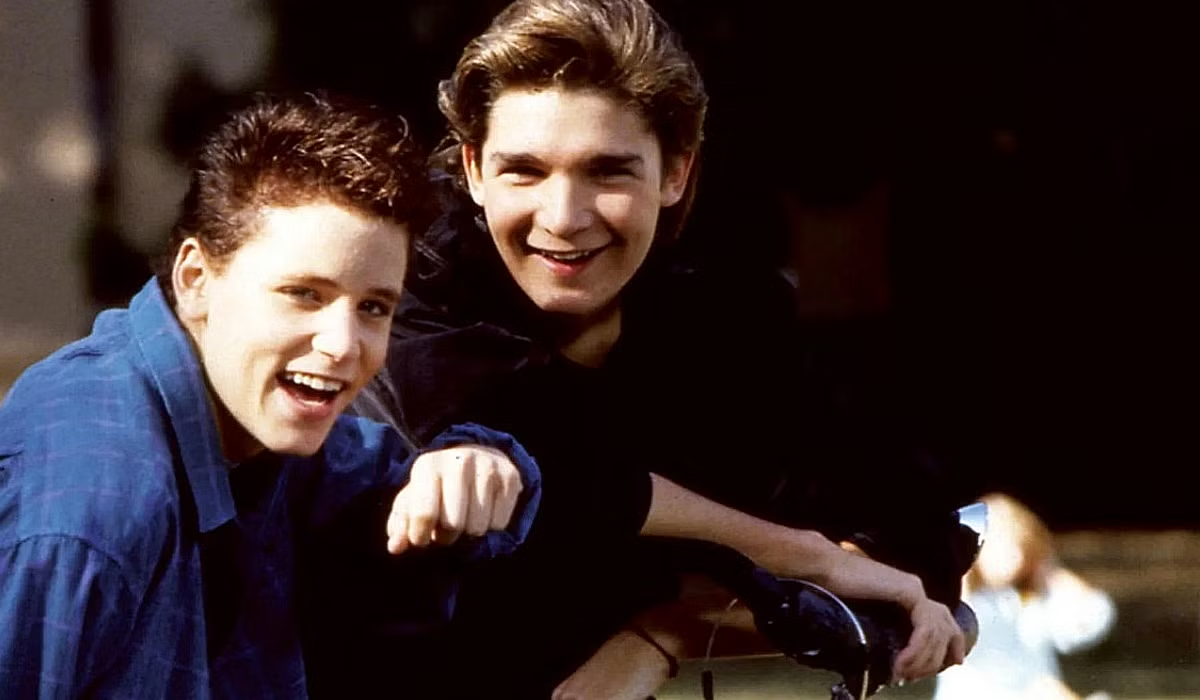
The era of The Coreys, which resulted in a telephone hotline where fans could "rap" with recordings of them, burned bright but only lasted about two years. It came to an end with 1989's Dream a Little Dream, the least successful (and most incomprehensible) of a glut of body-switch movies, and only notable for a scene in which Feldman woos future Mrs. Patton Oswalt Meredith Salenger with a Michael Jackson-esque dance number. Despite it being heavily promoted as a surefire hit when production hadn't even been completed, Dream a Little Dream was a flop even with teenagers, and The Coreys' star power quickly waned.
Contrary to popular belief, it was not, however, their final movie together. In fact, they made four more, none of which saw theatrical release, and one, a 1996 sequel to Dream a Little Dream that involved magic sunglasses, I never heard of until I wrote this piece. As has become sadly well-known, it was all downhill for the Coreys by that point, as both became textbook cases of child actors chewed up and spit out by an industry that had no place for them as adults, and soothed themselves with drugs and self-destructive behavior. It was both tragic, and all too predictable.
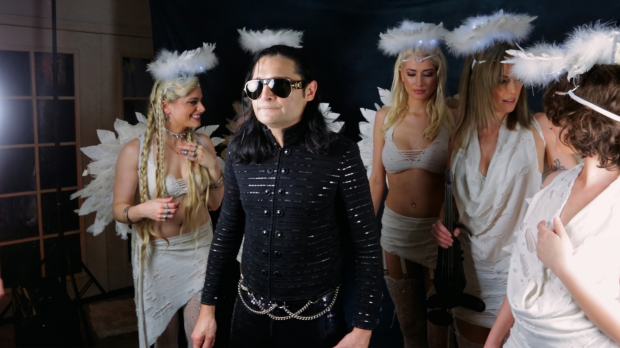
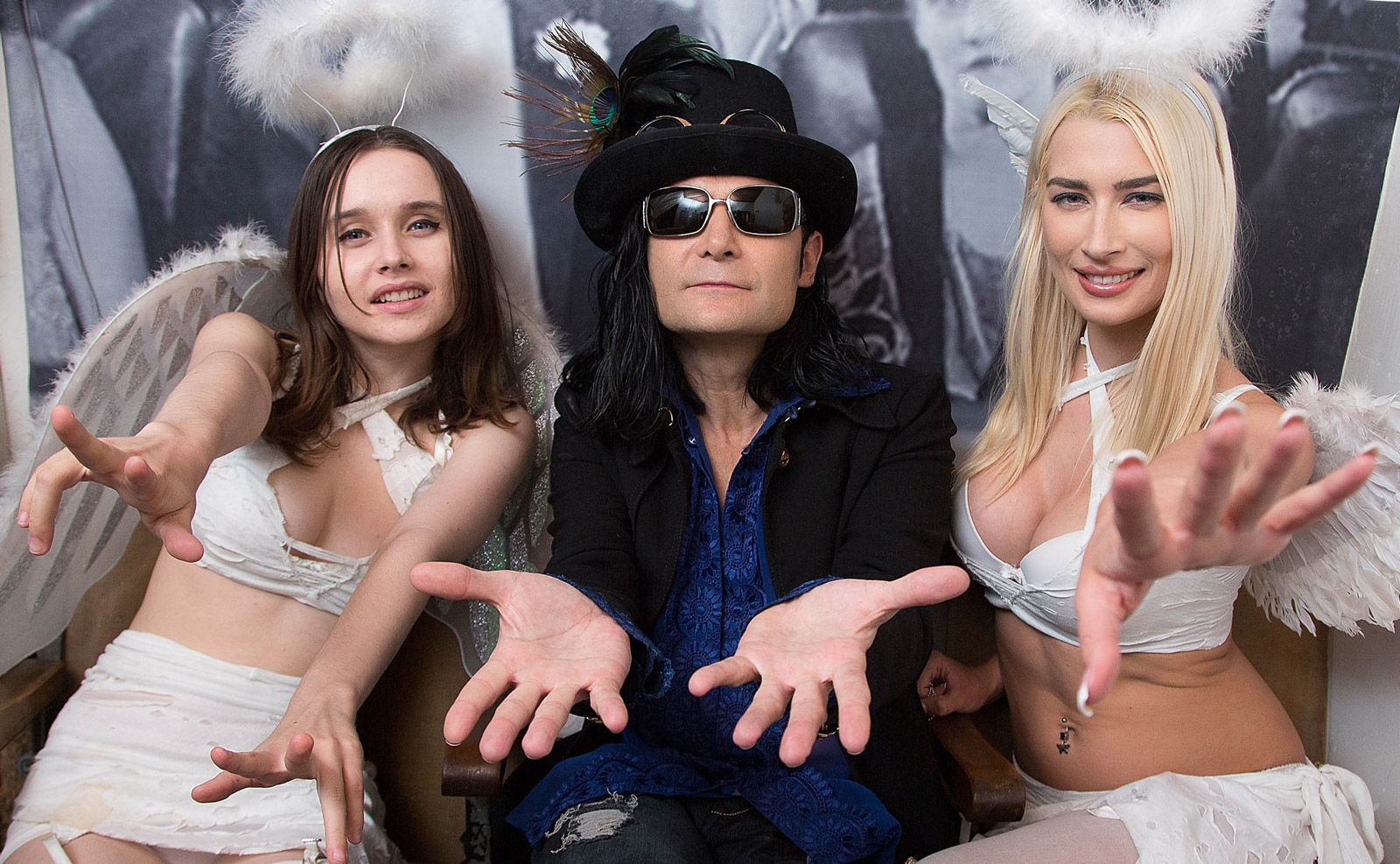
At the opening of Marcie Hume's documentary Corey Feldman vs. The World, Feldman dismisses the movies that made him a beloved 80s icon, because they weren't "his" movies. He believes that his real work is found in Corey's Angels, a charitable organization/talent agency/band/polycule consisting of himself and a series of interchangeable blonde women young enough to be his daughters, sent by God to spread messages of peace and light, by way of atonal covers of "Man in the Mirror."
The documentary depicts Corey's Angels on a 2017 tour, in an attempt to save face after a disastrous appearance on Today, when it was obvious that, despite Feldman's insistence that his scantily-clad Angels were all musically trained, they hadn't even been shown how to hold their instruments. Whereas Haim, who died in 2010, had become a tragic cautionary tale, Feldman had become something of a joke, who couldn't take the hint that it was time to retire and quietly live off his residuals. He had also developed a reputation as a creep, thanks mostly to a series of Vice articles by a reporter who attended a party at Feldman's Los Angeles home (dubbed the "Feldmansion") that appeared to be an homage to Hugh Hefner's legendary pajama parties, except none of the guests were famous and the take-home gift was chlamydia. With the tour, Feldman hopes to present himself to audiences as who he really is: a "lightbringer" who "mentors" impressionable, wayward girls as an act of benevolence.
If one didn't know anything about Corey Feldman vs. The World going into it, you'd think it was an uplifting story of Feldman overcoming the haters and doing what he loves. Though most of the audiences who show up for the tour are there to watch a car crash, he has a handful of genuine fans (all of whom are Gen X, unsurprisingly) who unironically support him and want him to succeed at...whatever the hell he's doing. If you didn't know anything about Corey Feldman other than the fact that he's a former child star, it would be almost touching (while still very funny at the same time).
But things take a decidedly darker turn when, while on a brief break from the tour, one of the Angels dares to book a plane ticket home to visit her mother. This brings the wrath of Feldman, who furiously lashes out, immediately firing the Angel and replacing her with a new guitarist. As we will come to see, despite insisting he's a professional who wants to be taken seriously in the music industry, Feldman treats replacing band members like replacing a pair of shoes, by simply getting on the phone and ordering new ones from a mysterious source.
This is but one sign that there's something untoward going on with Corey's Angels. Not a cult, exactly, but certainly a potentially abusive sister-wife situation, in which they all serve at the pleasure of the very short, extremely dorky Feldman. Despite the Angels' insistence that they're not with him under duress, and that Feldman is the best person they know, they do nothing without his say-so. Even when he does meet and greets (and actively recruits potential new Angels/girlfriends), the current Angels are forced to wait for him, and never permitted to go anywhere alone, not even to sleep or get something to eat. "What does the contract say?" Feldman shouts at an Angel in one unsettling scene. "The band always stays together!"
The ominous-sounding "contract" is a cudgel Feldman uses to keep the Angels in line, while also claiming to Hume that there is no contract, and that the Angels are free to come and go as they please, though he prefers they always stay together for vague "safety" reasons. If that doesn't sound convincing to you, then you'll be relieved to know that eventually, nearly all of the Angels have enough of his bullshit and quit, which Feldman and his wife curiously blame on Marilyn Manson. Coming up against accusations of rampant drug use, sexual depravity, emotional abuse, and unpaid wages, Corey's Angels folded, and Feldman's current touring band consists entirely of men, none of whom are made to perform in lingerie.
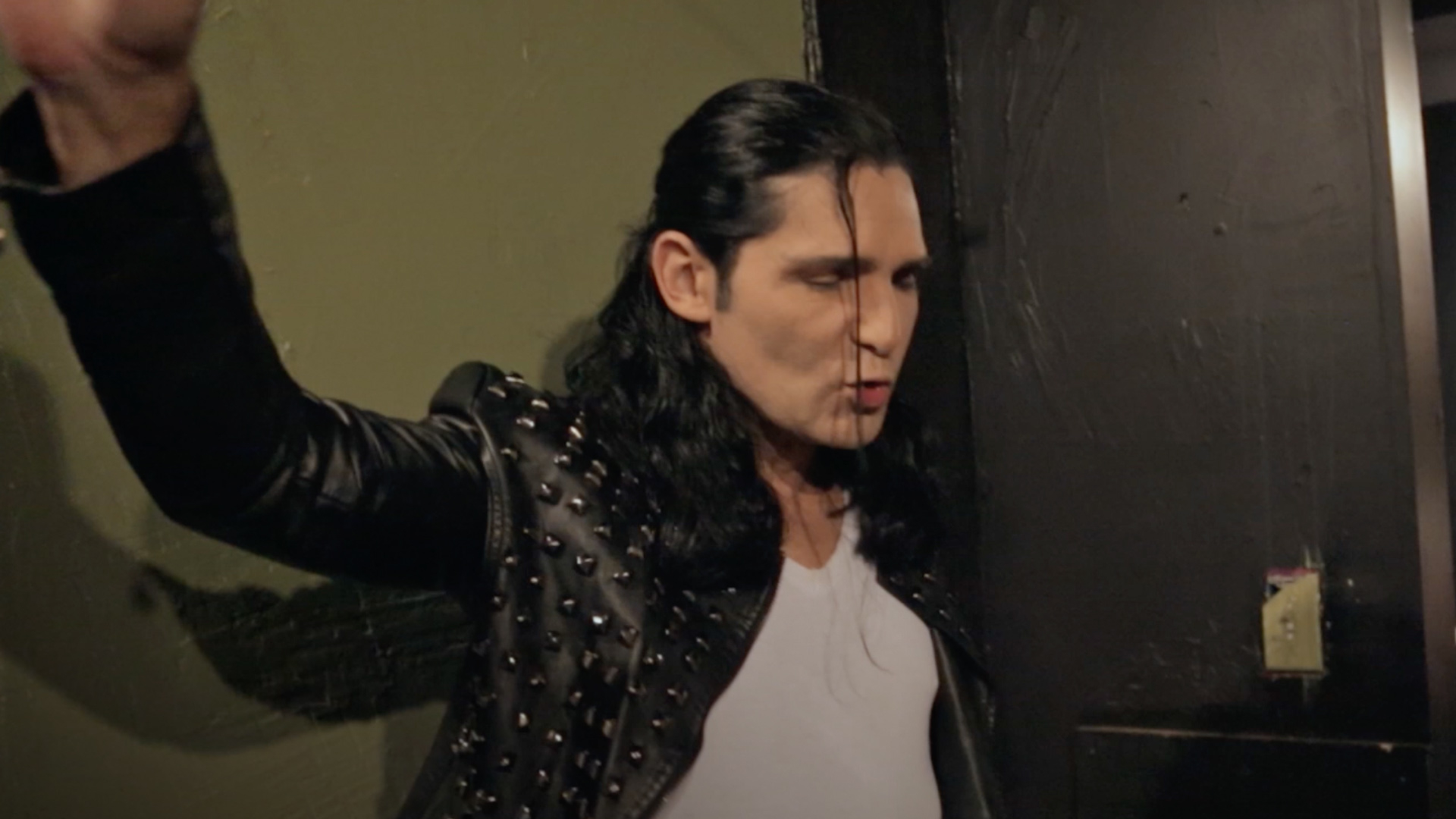
Unlike many modern documentaries, Marcie Hume doesn't make herself part of the story. She wisely lets Feldman make himself look bad, and it doesn't take much effort on her part to illustrate how cheap and tawdry the whole "Corey's Angels" operation is. And, make no mistake, it is very cheap and tawdry, from Feldman's Ed Hardy knockoff wardrobe to the drugstore bleach jobs forced on his Angels' fried, overprocessed hair, and the tacky, skimpy costumes they're made to wear, which don't even match. Even the logo for Corey's Angels looks like a bejeweled dick with angel wings. Though Feldman expresses not just shock, but confusion and dismay at the accusations that Corey's Angels is a barely disguised porn/prostitution operation, their promotional photos and interactions look like all they're missing is a pizza guy announcing that he's brought the pepperoni.
The documentary goes into Feldman's long-standing "crusade" to expose pedophilia in Hollywood, something he once claimed he was doing in honor of his late best friend Corey Haim, who was allegedly a victim of sexual assault as a young teenager, as was Feldman himself. Though Feldman was previously mum on who his own assailant was (only that it was unequivocally not Michael Jackson), he's pointed to numerous people as Haim's abuser over the years, including an unnamed film producer, their now-deceased Lost Boys co-star Brooke McCarter, and Charlie Sheen. According to Haim's mother, the most likely suspect was Dominick Brascia, an adult friend of Feldman's who was probably best known as the chocolate-smeared halfway house resident whose death sets off the chain of events in Friday the 13th: A New Beginning.
It's implied that a 2017 fundraiser Feldman created for a feature film he wanted to make about child sexual abuse in the entertainment industry was really to cover the mounting costs of the Corey's Angels tour, which, over the course of the documentary, loses more guitarists than Spinal Tap lost drummers. Indeed, despite his lofty claims that God Himself designated him as a speaker of truth, Feldman also insists that that's a paid position. Whatever his intentions, although the money was spent, the movie was never made.
Feldman eventually crowdsourced yet more money for a documentary that did get made. However, after a public screening at which Feldman claimed that "hackers" interfering with the livestream prevented it from being shown, it disappeared without a trace (other than Corey Haim's mother and Charlie Sheen vehemently denying the allegations in it). Here, despite spending much of the past two decades insisting that he was going to name names and expose the horrifying truth any minute, Feldman backtracks on that, making the baffling claim that it won't actually help anyone.
I'm lying, he does name one person: Corey Haim.
I knew that going in, and it's still startling. For Feldman to capitalize on his supposed best friend Haim's name (and premature, very sad death), framing himself as his avenging angel and depicting them as bonding over their shared trauma, only to do an abrupt 180 and point to Haim (who is dead and cannot defend himself) as his primary abuser (let alone to state that Haim's relationship was Brascia was consensual), well...folks, it don't sit right with me. I'm not saying he's lying. In the era of the Epstein Files, anything is possible. I am saying that painting Haim as the villain (while clamming up about any other potential victimizers) feels as tacky, tawdry, and cheap as every other attempt Feldman's made at staying in the spotlight.
Corey Feldman vs. The World is a fascinating documentary, simply because I don't know how to rate it. On a technical level, it's well-made. Though Feldman later claimed that much of what's depicted in it was fake or out of context, he's simply on camera too often for it to not be mostly the "real" him, and it's not a flattering portrayal. If Hume's intention was to make the audience wish that someone would both mercilessly beat Feldman's ass and hug him at the same time, it's a smashing success.

But that's the problem: it's hard to feel sorry for such a repugnant human being. Beyond the inherent grodiness of Corey's Angels (which, even in a best case scenario, is deeply weird), he's arrogant to the point of delusional, as when he claims that the tour will be so successful that a gig at Radio City Music Hall is all but ensured, and stating, apropos of nothing, that "All my wives became famous after marrying me." A quick peek at Wikipedia reveals that only wife #1 (of 3), Vanessa Marcil, made a name for herself, mostly in soap operas, a genre it's unlikely that Corey Feldman's name had any pull in, even at the peak of his career.
There are also the actual delusions, like that anyone who gives his performances a negative review (or, really, disagrees with him in any meaningful way) is a Satanist and working for the "dark media," a claim Feldman makes so many times over the course of the film that you could turn it into a drinking game. It's impossible to tell how much he genuinely believes any of this, and if so, how much of it is based in trauma from whatever heinous behavior he either witnessed or had inflicted upon him while growing up in the entertainment industry.
There's also an unexpected poignancy to the film. Feldman claims to have few fond memories of his acting career, but his home is heavily decorated with memorabilia from his most famous films. Conceding that the majority of his real fans (as opposed to the ironic ones) are attached to the Coreys period of his career, much of the typical set lists on the tour consist of songs from The Goonies and The Lost Boys, including a cover of "Cry Little Sister," during which the caption "harmonizing" does a Herculean amount of lifting.
I 100% believe that Corey Feldman was sexually assaulted as a young actor. Probably more than once, by different people, especially considering that, by his own admission, he had no responsible adults in his life looking out for him. It explains why he's still pretending to be a rock star at nearly 55, despite displaying no discernible talent for either singing or playing an instrument. He once may have been considered a promising dancer, if he wasn't still doing the same Michael Jackson homage he did in Dream a Little Dream more than 30 years ago. He even still occasionally has the same single greasy tendril of hair hanging limply over his forehead from that time, despite his claims that he'd love nothing more than to escape the past.
It explains why he has the emotional intelligence of a teenager, wearing light-up sneakers and giant Elvis sunglasses, while constantly whining about how misunderstood he is and calling everyone "dude." I'm not a therapist, but it seems like Feldman refashioning Haim as a victimizer (and portraying him as a willing participant in his own sexual abuse) is how he's dealt with being the person who introduced Haim to his rapist. Guilt is a lot easier to manage if you convince yourself that you have nothing to feel guilty about, after all.
It'd be easy to sympathize, if not for the fact that Feldman, who at no point ever indicates that he's sought professional help to deal with his trauma, turned the abuse he experienced into an excuse for being an abuser himself, and keeping an unknown number of naive young women in what's essentially indentured servitude, if not, as accusations and rumors suggest, sexual slavery. Considering how much Feldman's (now ex) wife parrots his accusations of Satanic worship against the people who displease him, while praising Feldman himself as a pure force of goodness and love, clearly there's some sort of emotional manipulation taking place. He may not be a Jim Jones-level cult leader in the making, but that's only because he, frankly, doesn't come off as smart enough for the job.
Now that Feldman has predictably denounced the documentary (and presumably added Marcie Hume to an ever-growing list of Satanists who seem intent on ruining his life for some unknown reason), we'll never know what he hoped to accomplish from agreeing to do it, other than showing the world what a great showman he (thinks) he is. Again, he's too aware of the camera's presence, even when he's berating an Angel, to pretend that he didn't know what it was capturing. He wants to be loved, but fails to even be likable. It's a cry for help, but who would want to help him at this point?

Comments ()