Regrettably, I have more upsetting news for Gen X
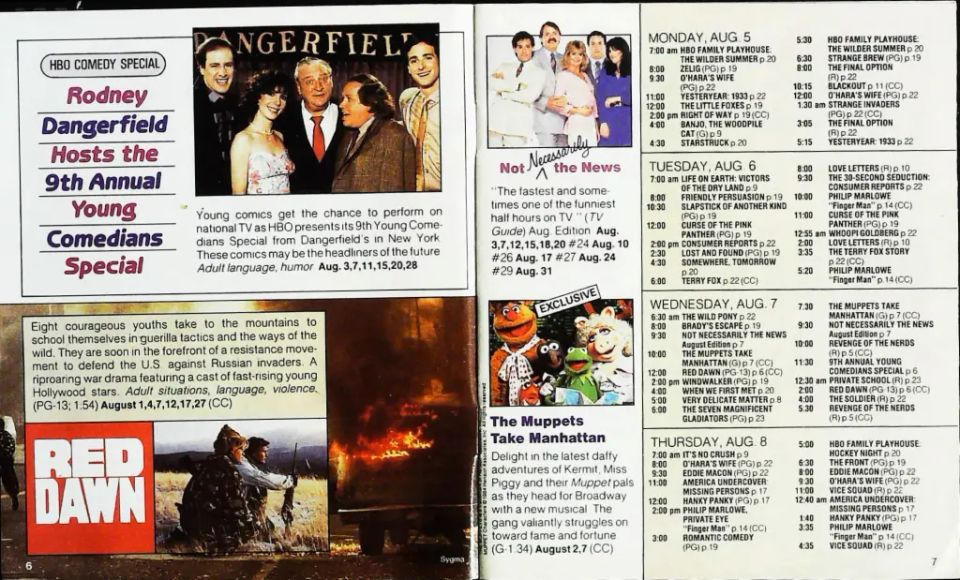
Okay, we've all had time to process the discovery that The Beastmaster was nowhere near the most aired movie on HBO in the 80s, so let's move--
I'm kidding, I haven't stopped thinking about it since last week's newsletter. Well, let me clarify, I haven't been thinking about it constantly (though it'd be an effective distraction from endless bad news), but I have been pondering how we collectively imagined watching The Beastmaster at least once a week between 1983 and 1988. Though I haven't seen it in years, I can still clearly picture it, particularly its gnarlier moments, like the enchanted eyeball ring, those creepy bat-wing creatures that crushed people into green soup, and Rip Torn's tiny skull barrettes.
I'm genuinely boggled at how Yes, Giorgio, a movie I never watched even once, still managed to air more times than The Beastmaster, a movie that I remember watching, if I had to guess conservatively, at least 40 times over several years. I'm not the only one: remember, there's a whole joke about what HBO actually stood for in the 80s. It's the only reason anyone remembers The Beastmaster, which had the misfortune of being released just five months after the stylistically similar Conan the Barbarian, and barely made a dent at the box office. It became such a beloved slice of cinematic cheese that two sequels and a short-lived TV series were released in the 90s. Did Yes, Giorgio get two sequels and a short-lived TV series in the 90s? I rest my case.
So how did we get it so wrong? Well, turns out there's an easy explanation that you can find on The Beastmaster's Wikipedia page (which is considerably longer than the Wikipedia page for Yes, Giorgio), but I'm still going to save it (along with the implausibly low number of times it did actually air) for close to the end of this. Until then, let's continue going down the list...
29 to 20
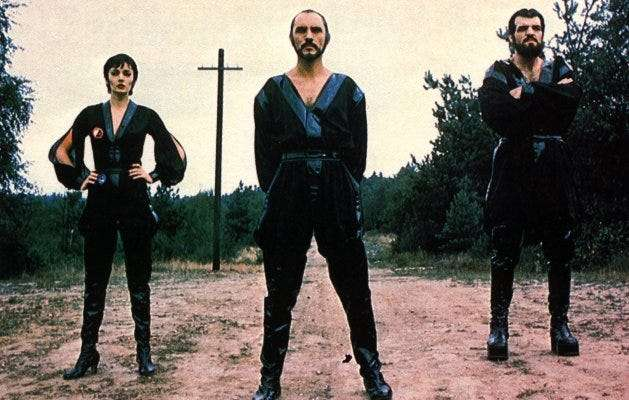
Superman II (1980): I don't think it's a controversial opinion that, while original Superman is a great movie, Superman II is more entertaining. Much of the credit for that goes to the legendary Terence Stamp (R.I.P.) as General Zod, who gave the budding film franchise some much-needed imported British ham. While Michael Shannon was fine as Zod in Man of Steel (in fact, he may have been the only good thing about it), he played the role as a murderous psychopath, while Stamp is coldly menacing, only raising his voice when he has to. But when he does, as in the iconic "KNEEEEEL BEFORE ZOD!" scene, it's an all-timer (though Nicol Williamson is a strong second with "LOOK INTO THE EYES OF THE DRAGON AND DESPAAAAIR!" from Excalibur, another movie I'm surprised didn't make this list).
Shipwreck! (1978): I don't recall if I ever saw this, but I probably did, given my great love as a child for stories about people stranded far from home and having to rely on their wits and whatever they had handy to survive, whether it was Swiss Family Robinson or From the Mixed Up Files of Mrs. Basil E. Frankweiler, though all things considered I've have definitely chosen being stuck in a museum in the middle of New York City than on an deserted island.
Kiss Me Goodbye (1982): Alleged comedy that I've seen but cannot recall, about an uptight woman who's haunted and harassed by the ghost of her annoying husband (James Caan, who later claimed this was the least favorite of his own films, despite later making Sicilian Vampire). Not to be confused with 1985's Maxie, in which an uptight woman is haunted and harassed by the ghost of a failed actress.
Continental Divide (1981): This one's a bit of a downer because of the obvious "what could have been" aspect of it. As is known, Continental Divide, a screwball romantic comedy, was John Belushi's attempt at leaving Bluto Blutarsky behind. It turned out that a restrained, understated Belushi was a perfectly charming leading man: the problem was that audiences weren't interested in seeing that side of him, just as they rejected his playing the straight man to Dan Aykroyd's amiable psychopath in the previous year's Neighbors. As can be established from how the endings of movies like Fatal Attraction and Pretty in Pink were changed after test screenings, audiences are dumb.
Any Which Way You Can (1980): You want to know how dumb audiences are? They made this animal-murdering white trash cosplay, along with its moronic predecessor Every Which Way But Loose, into huge hits for Warner Bros., while at the same time saying "Thanks, but can you go back to blowing mashed potatoes out of your mouth?" to John Belushi in Continental Divide.
St. Helens (1981): An early HBO original recounting the events of the Mount St. Helens (no apostrophe, I checked) eruption. Considering the real-life eruption happened barely 10 months before the film's release, writers Larry Ferguson and Peter Bellwood must have started the script the minute the first rumble was heard. Weird bit of trivia (and possibly the only thing worth mentioning about it): the score was composed by Goblin, right between the scores for Hell of the Living Dead and Tenebrae.
Six Weeks (1982): This movie is my nemesis. I'll be having a perfectly good day, and then a phantom voice will whisper, "Remember Six Weeks?" and the day is immediately ruined. Combining the worst aspects of the "saintly dying person" trope with the "old soul in a child's body" trope, with a spiritually repugnant twist that only Woody Allen could love, I've written at length about how much I despise this movie and everyone involved with it, and somehow it aired an unforgivable 41 times in three years.
The Incredible Shrinking Woman (1981): You can't go home again, as the saying goes, and I've applied that to the idea of revisiting The Incredible Shrinking Woman, a movie I adored as a child, but couldn't possibly live up to my fond memories of it. However, it did get me thinking about the possibility of a remake, and how it could be a darkly satirical take on disordered eating in the era of social media influencers. It's a great idea, and here I am just throwing it out to the wolves.
Chariots of Fire (1981): Add this to my "Best Picture Winners I've Never Seen" list. I know, I know, you're about to tell me how good it is, and I believe you, I really do. But with thousands and thousands of other movies I also haven't seen yet, a sports drama about pale young British men running to and fro is very low priority, I'm sorry.
The Secret of NIMH (1982): Anyway, why watch Chariots of Fire when I could just watch The Secret of NIMH? The best of a fascinating run of children's movies that were also creepy and/or sad (see also Return to Oz and The Last Unicorn), it's a wonder more people my age don't point to this as much as Artax's death in The Neverending Story as the moment they went from kids to jaded, world-weary miniature adults.
19 to 11
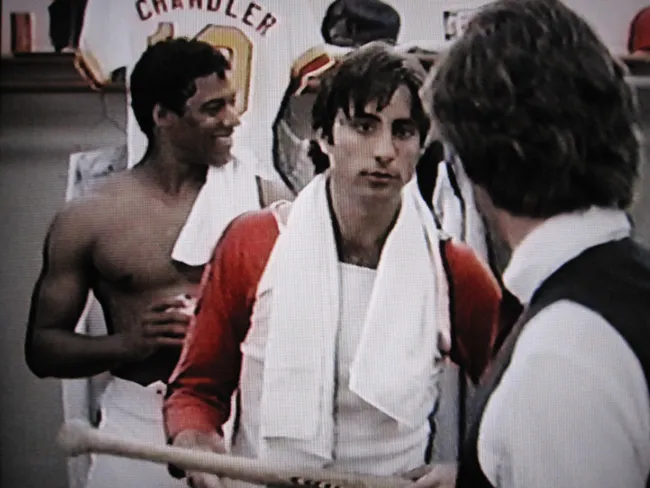
Blue Skies Again (1982): A girl wants to play major league baseball, and everybody loses their fucking minds in this lighthearted comedy that rated neither a theatrical release nor any professional critic's review that my half-assed search could find. The Betamax Rundown, in a 2012 post, essentially recounts the entire plot (and includes a screenshot of a young Andy Garcia lookin' like a snack), and you won't be surprised at how it ends.
Wonder of It All (1974): Speaking of obscurities, there's this, a nature documentary from 1974 that seems like something HBO got as a freebie with the rights to a bigger movie (say, Blue Skies Again). However, given it aired a whopping 44 times in three years (including 9 times just in April of 1983), it seems more like somebody at HBO got a sweet deal, earning a cut every time it was shown.
Right of Way (1983): HBO original dramas occasionally addressed social problems, and the problem addressed here is "getting old sucks." I certainly won't argue with that, which is why I have no intention of revisiting this knee-slapper about an elderly couple (James Stewart and Bette Davis) who choose suicide over facing what remains of their lives without each other.
Eddie and the Cruisers (1983): Like Six Weeks, I've written about Eddie and the Cruisers at length, but with a grudging affection instead of outrage. It's deeply silly, self-important "the day the music died" nonsense, but with a killer soundtrack, featuring the hit single "On the Dark Side," notable for sounding like a rejected track from Born in the U.S.A., despite the movie's insistence that the time for all-American rock 'n roll had passed.
Absence of Malice (1981): Back to the prestige films with this Paul Newman/Sally Field drama about what happens when the press bends the truth and ruins a man's life for a good story. Thank god we stopped that shit, am I right??
The Outlaw Josey Wales (1976): This was The Beastmaster for my mother, in that every time it was on (which was evidently more often than The Beastmaster) she'd stop what she was doing to watch it. Though it played a lot in my house, I'm not sure I ever paid attention to it, so I'm going to count this as a "never saw it." A highly acclaimed Western that star Clint Eastwood described as an anti-war parable, though his next film was Every Which Way But Loose, which was not an anti-war parable, but did feature an orangutan giving the finger.
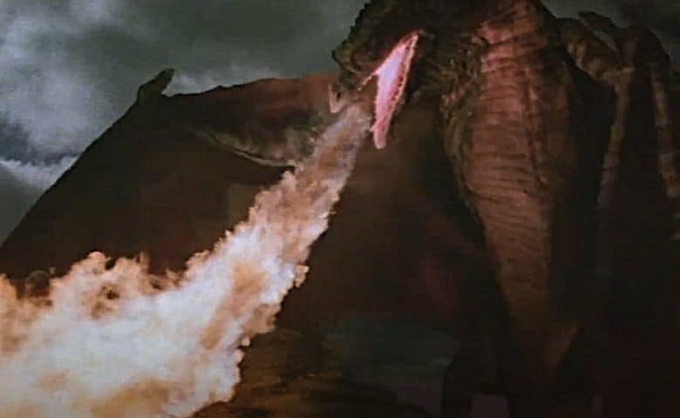
Dragonslayer (1981): Of all the movies featured, this got the most unfair shake. Coming in early on the big-budget fantasy-adventure wave, backed with Disney money, and with special effects from Industrial Light and Magic, Dragonslayer should have been a huge hit. It was with critics, but audiences rejected it, either because it was too British (Excalibur, released just two months earlier, also underperformed), or because they were puzzled over the name "Disney" being attached to a dark, not exactly child-friendly movie featuring scary dragons instead of friendly ones. Mind you, this was more than 40 years before the entire Alien series was available for on-demand viewing on Disney+, so the confusion was understandable.
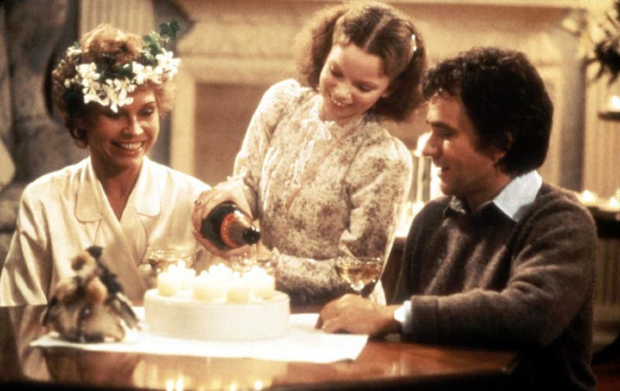
Arthur (1981): I'm about to say something that might startle you: I don't like Arthur. Yes, I understand for many people it's a beloved comedy classic that was one of the biggest box office hits of 1981, but it never landed with me, not as a kid, and definitely not now. For one thing, I never got the appeal of Dudley Moore, master of "ain't I a stinker?" comedy, and here it's all "ain't I a stinker?" comedy, exacerbated by his playing one of my least favorite character archetypes, the charming drunk. Having been around a few drunks in my day, I found exactly zero of them charming, and as much as the movie demands that you love him, Arthur is particularly insufferable (I'll go to the mat over "Arthur's Theme" being a great song though).
Super Fuzz (1980): A bumbling cop gains superpowers after being exposed to radiation in this endearingly silly comedy that was prime viewing when you were home sick from school and The Price is Right was over (I regret to inform you that ACAB does, in fact, include Super Fuzz, however).
10 to 1
My Favorite Year (1982): I know, I said I don't like movies about charming drunks, but for My Favorite Year I'll make an exception. Mauybe it's because star Peter O'Toole (who might have actually been drunk while filming it) brought some dignity to his performance, whereas Dudley Moore just cackled and mugged. Also, the audience is gradually won over by O'Toole's character, a fading actor who has to be kept out of trouble by a hapless TV writer, whereas in Arthur the viewer is practically ordered at gunpoint to find Arthur an irrepressible delight.
Finnegan Begin Again (1985): The Music Man's Robert Preston plays a senior citizen who deals with job demotion and a senile wife in the most constructive way possible, by falling for a woman 20 years younger than him. But she's played by Mary Tyler Moore, so who could blame him? Admittedly, I haven't seen this, and considering it was written by Joan Micklin Silver, it's probably not nearly as bad as I'm making it sound.
9 to 5 (1980): Watching 9 to 5 today is a depressing experience. Not because the humor didn't age well – on the contrary, it's just as insightful and relevant now as it was over 45 years ago. That's the problem. Despite the film's triumphant ending, virtually nothing has changed for women in the workplace. We're still fighting for equal pay, affordable childcare, more opportunities for promotions, and for bosses not to play grab-ass with their employees. We even still have women like office toadie Roz, who are all too willing to throw other women under the bus for a crumb of male approval. It's all very bleak, so let's move on to...
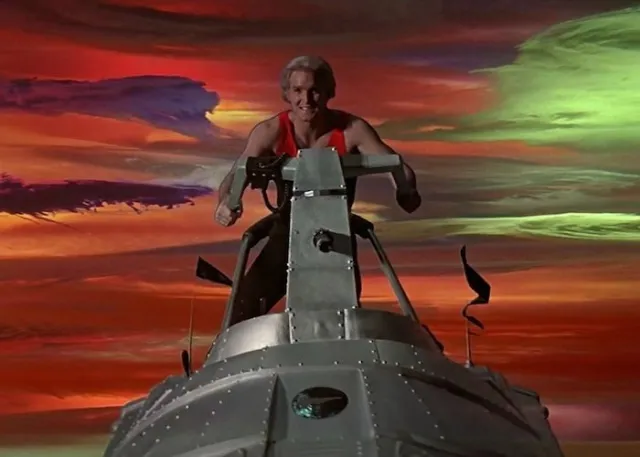
Flash Gordon (1980): A masterpiece. I have nothing more to add.
Between Friends (1983): Another HBO original featuring Elizabeth Taylor and Carol Burnett as recent divorcees who help each other navigate through the travails of middle-aged dating and menopause, and speaking of which, can we show HBO some appreciation for being one of the few channels willing to portray middle-aged women as something other than someone's unfuckable, nagging shrew of a wife? NOTE: this should not be confused with 1986's Just Between Friends, which is also about a female friendship that's put to the test over infidelity committed with Ted Danson.
Victory (1981): Mostly forgotten sports/war drama notable for featuring real-life professional soccer players in the cast, and this disturbing poster that fused the three main characters together as if they were run through Seth Brundle's telepod.

Daffy Duck's Fantastic Island (1983): This aired 51 times between 1984 and 1988, and I can't say with certainty that I didn't watch it every single time, even though by 1988 I was already halfway through high school. This isn't so much a "movie" as it is a collection of clips strung together with a parody of Fantasy Island as a vague framing device. Speedy Gonzales is, of course, the stand-in for Tattoo, essentially putting a hate crime on top of a hate crime.
The Terry Fox Story (1983): Docudrama about Canadian hero Terry Fox, who didn't let missing a leg stop him from running over 3,000 miles to raise money for cancer research. If you watch The Terry Fox Story and don't know anything about the real Terry Fox (who has several hundred schools, parks, streets, and monuments named after him across Canada), prepare to be bummed out by the ending.
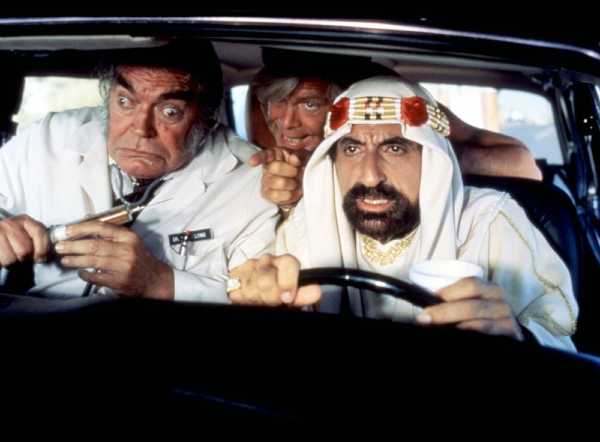
The Cannonball Run (1981): Old people complaining about the release of yet another Scary Movie have no room to talk when we grew up in the era of smug, self-congratulatory hangout movies like The Cannonball Run. The most successful in the wave of shitkicker chic comedies like Every Which Way But Loose and Smokey and the Bandit, while The Cannonball Run legally qualifies as a feature film, it's really just Burt Reynolds and 30 of his closest friends wisecracking, driving cool cars, ogling broads, and engaging in a little harmless racism.
Before we get to the #1 movie, I suppose it's time to reveal just how many times The Beastmaster aired. Somehow, impossibly, only 23 (whereas the far less entertaining Cannonball Run aired 54 times). Even more impossible, all those all those airings were condensed into three months between 1984 and 1985. How did we retcon it so that The Beastmaster was keeping the lights on for HBO during the 80s? Well, it's likely because TBS and the USA Network expanded nationwide then, and without the budget for prestige films, filled in the spaces between game shows and reruns of Gomer Pyle, USMC with HBO second and third-tier fare. So, I didn't imagine watching The Beastmaster many times as a youth, I just didn't always see it on HBO. A pretty boring explanation, but at least I know I'm not entirely crazy (just mostly).
As for the the most frequently aired movie on HBO during the 80s, well...let's just say the Price is Right sad trombone would be appropriate here. It's such a letdown that the creators of the countdown video don't even name it, and for reasons that will be obvious shortly, it's been swept into the dustbin of history, but if you were alive and sentient in the 80s, it'll come back to you.
The #1 most aired movie on HBO in the 80s (58 times in four years) was Bill Cosby: Himself, a stand-up comedy concert filmed before Cosby created one of the biggest sitcom hits of the 80s, but long after he had become a trusted, fatherly figure in pop culture, whose endorsement of Jell-O pudding products vastly improved sales for the then-struggling company. In fact, Cosby amassed a collection of endorsement deals rivaled only by Shaquille O'Neal in the 2020s. Even as recently as 2011, he was still considered among the most trustworthy celebrities in America, before Hannibal Buress called him out as a well-known sexual predator, rendering Cosby one of the only celebrities who saw actual consequences from the #MeToo movement.
My mother loved Bill Cosby: Himself, and you know what? She was right, it was very funny. "Dad is great...gives us the chocolate cake" was often quoted around my house, as was "Lemonade, that cool, refreshing drink" from Eddie Murphy: Delirious. Despite Cosby's single use of the word "asshole," it was a good example of clean comedy that could still be funny, and would probably hold up fine today, were it not for two tragedies that happened years apart. The first was the murder of Cosby's only son, casting a decidedly morbid pall on Cosby's bit about his wife once being so mad at their son that she ordered Cosby to kill him.
The second tragedy, of course, was Cosby's failure to stop himself from drugging and raping women. Knowing that while trying to watch Cosby tell wholesome stories about his wife and kids causes a sense of cognitive dissonance matched only by seeing Donald Trump pop up in Home Alone 2. Trying to discern who the "real" Bill Cosby is, and understanding that he's both a dedicated family man and a predator (let alone that there are many more like him hiding in plain sight) is enough to make one want to spend a long time in the woods away from so-called "polite" society.
But hey, how about that Beastmaster, huh? Still a classic.
ANYWAY, if you made it through to the end of this epic undertaking, let me direct you to Drew McWeeny's The Last 80s Newsletter You'll Ever Need, which does this kind of thing much better, with actual research and industry insider knowledge instead of pithy, uninformed observations.

Comments ()